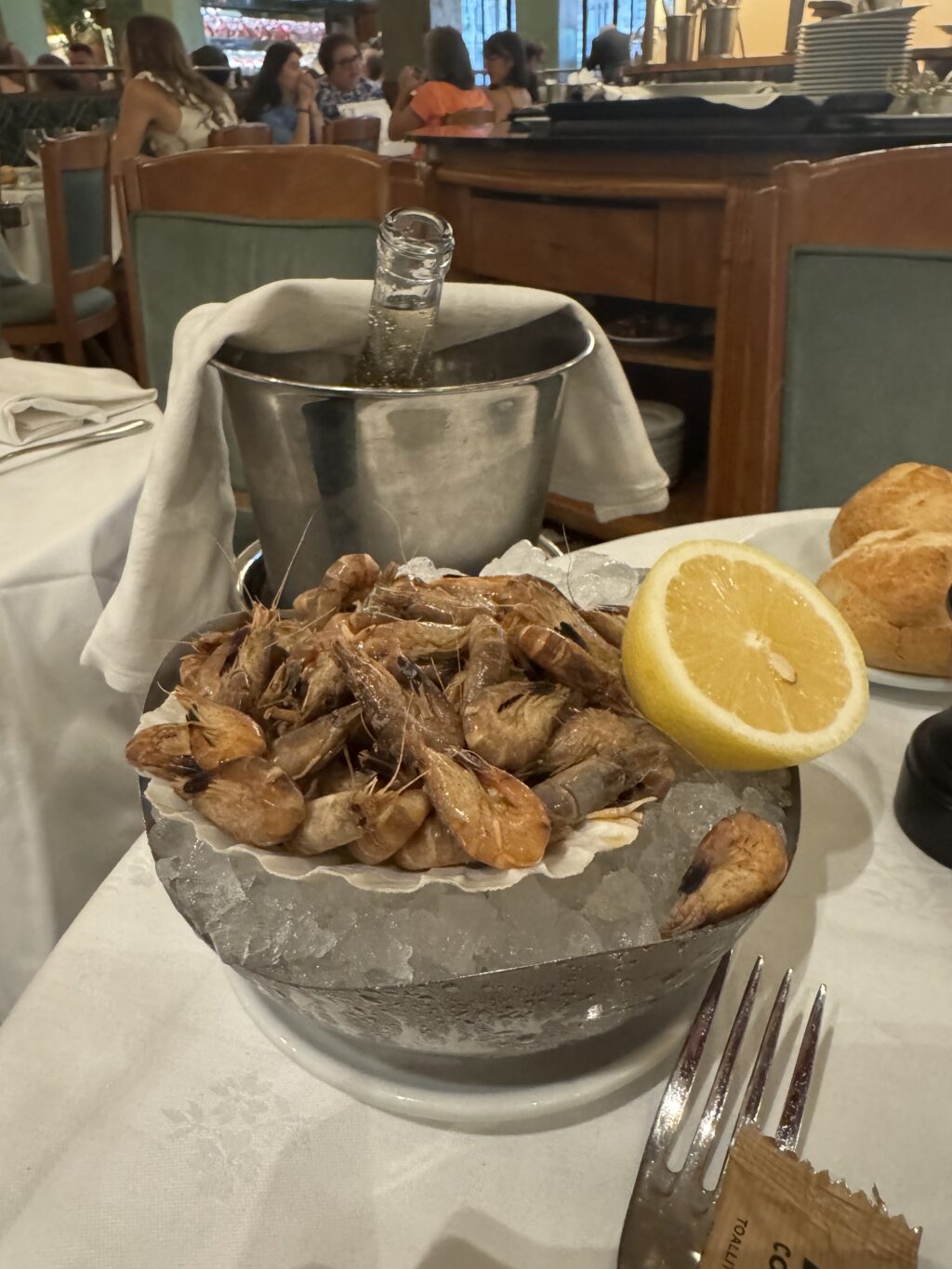
Last week, I was sitting in Paris’s La Coupole in Montparnasse, sipping a glass of Muscadet that was way under half the price of anywhere in Cardiff, where I had been the week before. I was en route to Sarajevo, flying out of Paris rather than the UK, because it was a third of the price doing it that way. On Friday, I travel back to the UK, again via Paris, which, this time, was £174 cheaper than flying straight into the UK and, as I had £39 Eurostar tickets both ways, there was no contest on either journey. Oh yes, – and the hotels in Paris were under half the price of those in Cardiff (yes, I know. When did that happen?).
All of that, however, is incidental – just friendly advice, should you wish to do a trip in Paris for less money than it takes you to fly anywhere from the UK. It is always a cheaper route.
Incidental, because of the shock that awaited me upon arrival in Bosnia. Having sat in La Couple, witnessing three women, apart from myself, drinking or dining alone (La Coupole, exquisite service, Paris, solitude and wine – it really is my heaven), I was surprised to find myself in Sarajevo as the only one (and the only one in over 10 days) as a solo female diner.
True, I hadn’t done much research, but having visited many places in the Balkans over the past two years, I hadn’t expected so great a culture shock.
The Bosnian War, from December 1992 to April 1995 involved three main groups – Bosniaks (Muslims), Serba and Croats – and it is estimated 100,000 died, with over two million others being displaced. I have heard countless stories about mixed marriage couples being exiled, and as far as I understand it, much of Bosnia was re-built with Saudi money – with certain conditions. One, being in the rebuilding of the mosques, that women veiled up.
So, I am wandering the streets of Sarajevo, bare arms, desperately searching, in the extreme heat, for anywhere that might be serving beer. The five star Swissotel is a no-no as it is owned by a Saudi and there is no alcohol on the premises. I weep before the kaleidoscope of sherbets behind the glass.
Everywhere I look, there are coffee shops, which are no good to me as I can’t abide the smell of it, let alone the taste. The swathes of material that allegedly house women somewhere inside their colourful depths are all around, mostly in other small groups of tents, or accompanied by men. Most of the tourists are in couples or families, although I spot the occasional man alone. But as for women? Nope. I’m the only one.
When I eventually find a hostelry serving beer, I devour it (nothing beats a cold Carlsberg) like a woman who’s just run a marathon in the desert. Nobody looks at me oddly and, thank goodness, no one had refused to serve me, but this isn’t a country I’ll be returning to in a hurry. Not ever, actually.
It’s not just the women/drinking aspect of life here. The thousands of gravestones that stand out like pillars of salt amid the greenery are painful reminders of the brutality of The War – that everyone still talks about, their eyes sad, their mouths continuing to vent fury.
This is a very complex part of the world, as I’ve been discovering on my travels over the past two years. You can forget questions along the lines of ‘Who are the goodies and who are the baddies?’ because everyone has a different view. There was good and evil on all sides, and maybe I have a particular fondness for Bulgaria as it appears to play the role of Switzerland amid the conflict you feel still rumbles just below the surface.
Katya Adler’s BBC series The Balkans: Europe’s Forgotten Frontier was recently updated to include Bosnia Herzegovina and it does much to unravel the complexities and rages throughout the turbulent decades that followed the war. The relationship – or lack of – between Serbia and Kosovo, for example, is another intense conflict that the series explores among people who refuse to accept Kosovo’s independence, which was declared in 2008.
I didn’t come to Sarajevo in search of the Balkans’ answer to Ibiza (in my dreams now, as it happens); it’s just that I’ve become fascinated by this part of the world. Apart from the assassination of Archduke Ferdinand in Sarajevo that started WW1, it’s an area that featured little during Welsh history lessons that pounded us weekly with tales of the bloody Mabinogion.
Bulgaria and Albania remain my favourite countries in the Balkans, not least because of the energy of the young people I’ve met who, while acknowledging the past, look with optimism towards the future.
Not so in Sarajevo, where it’s clearly a man’s world. But then I’m starting to think, as men try to eliminate women’s identity with obsessive ideologies and scientifically unsound theories, that everywhere still is.
It’s just dressed up in different ways. Hijab or no hijab, it’s still a world in which women must struggle to be seen.
To read past posts that are exclusive to subscribers, and to gain access to future exclusive content, please consider a subscription to:
https://jacistephen.substack.com/subscribe
Or you can buy me a coffee here (it’s really wine). Click below: