Tirana.
The word sounded so exotic to me. I was seven years old and had been given my first encyclopaedia for Christmas.
I have always had a penchant for learning lists – helped by having a phenomenal memory. Not photographic but not far off.
I have also had a passion for history from an early age. My childhood ‘friend’ was called André and, although I had never visited France, I knew it was where I belonged and I retain a love of the language, the country and its people to this day. My heart continues to beat with the daily joy of living in Paris for seven years and I regard it as one of my life’s great blessings.
So, when I found the page of capital cities of the world in my encyclopaedia, I set about learning them all. Albania was the first country on the list, and I remembered its capital from that day forward, often wondering why it stuck in my mind so forcibly.
In May 2024, I went to Tirana for the first time. I had put all my worldly goods in storage and set off to explore a part of the world with which I was totally unfamiliar – the Balkans. Within the first eight months, I visited Albania, Bulgaria and Serbia. I also visited Georgia (not part of the Balkan region but often associated with it culturally and politically).
Over the past two years, the countries I have revisited time after time are Albania and Bulgaria, both places I have come to love and care for with an intensity that joins my Favourites list, along with France.
But for very different reasons.
The more I have delved into the history of the Balkans, the more I am impressed by its people, who have had to endure more than most Brits ever get to read about, let alone experience. The British press exposes the activities of (in particular) Albanians who have left their own country to pursue a life of crime in the UK. But it’s a very one-dimensional focus on a people who have been through so much and yet retain an inherent goodness and kindness that regularly brings me to tears.
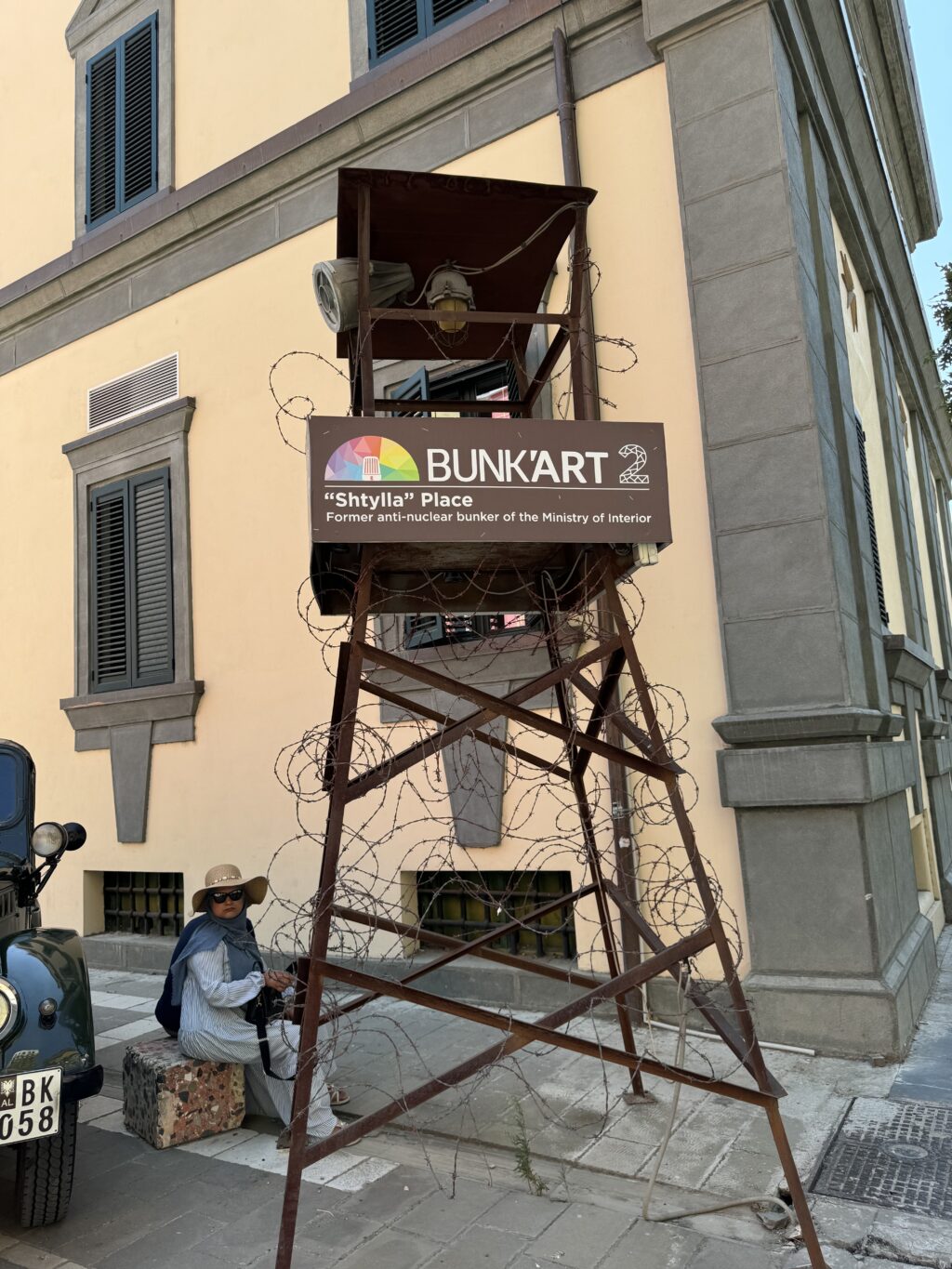
Communism collapsed in 1991 in Albania and it was not until I visited Tirana and Bunk’Art 2 (one of several places where you can survey the devastation of past suffering) that I was made aware of the horrors inflicted upon the people.
That date. 1991. Unbelievable. I was 31 years old. Why had I not known about all this? I, who had studied history not only in school but during my first year in university? Why was the world not screaming about the torture and killing taking place on a vast scale every day?
Yes, there are horrors taking place all over the world at any one time, but today, because of greater access to news, not least through social media, we are more aware of the realities.
In Albania, the four decades of rule under Ever Hoxha not only the world remained deaf to the atrocities, but most Albanians did, too. State controlled information saw to that and, in 1989, it is reported most Albanians did not know that the Berlin Wall had fallen.
Many Albanians are today fluent in Italian, because the State controlled television viewing – only between certain hours and, even then, only State propaganda. Many homes set up makeshift aerials to pick up the news from Italian TV, an act in itself that could get you killed.
Listening devices were placed in domestic appliances in homes – kettles, irons and the like – to trap detractors of the State, which could also get you killed.
In Bunk’Art 2, row after row, list after list of the names who endured this level of inhumanity cannot fail to shock you into a state of disbelief that it took until 1991 to bring it to an end.
Despite their history, I find Albanians to be a very amenable people. There are certainly pockets of old Communism that remain, but young people, while wanting to remember, also want to move on: not to be defined by their parents’ and grandparents’ struggles.
I plan to spend more time in Albania, which is not only a fascinating country but a beautiful one.
Tirana is a vibrant capital, and the coastline from Vlore down to Sarandë/Ksamil (the ‘Albanian Riviera’ as it has come to be known) has some beautiful stop-offs along the way and, at height of season, great fun.
Borsh, Dhermi, Himara (that I’ve already been to three times) – this 120km stretch along the Ionian Sea in the southwestern part of the country (the Adratic Sea meets the Ionian in Vlore) is stunning. Sarandë is also directly opposite Corfu and reachable by ferry (just 30 minutes), so while sharing the same beautiful coastline, you can enjoy Albania for half the price.
With my USA passport, I can stay in Albania for up to a year on a tourist visa (Brits are limited to 90/180), but the sad thing is for Albanians, most will never be able to travel. I met a young man who earns 200€ a month for a daily bar job. Think about that. A MONTH. And as the price of groceries increases (as it is doing throughout the Balkans, as everywhere else), life becomes harder.
Be warned: the currency is lek and you can’t buy it in advance – and they love cash. Larger places like Sarandë also take euros. Gosh, do they love their euros!
As a BAB (Born Again Balkan), take note and put Albania on your bucket list.
Not only because it’s beautiful and friendly.
But because their history deserves it.
To read past posts that are exclusive to subscribers on Substack and to gain access to future exclusive content, please consider a subscription to:
https://jacistephen.substack.com/subscribe
Or, if you enjoyed this post, you can buy me a coffee here (it’s really wine). Click below: